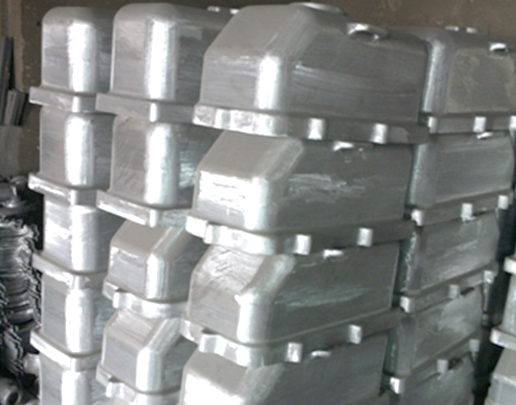
Dalian castings, as an important manufacturing process, play an irreplaceable role in industrial production. By continuously improving processes and technologies, the quality and performance of castings can be enhanced to better meet the needs of modern industry. I hope that castings can continue to develop in the future and contribute more to the development of various industries.
There are many types of castings, including cast iron, cast steel, aluminum alloy castings, copper alloy castings, etc. Castings made of different materials have different characteristics and applicable ranges. Castings have a wide range of applications in fields such as automotive, aerospace, and mechanical manufacturing, and are an indispensable and important component of modern industrial production.
What are the key steps to pay attention to in the processing technology of Dalian castings?
Design and mold preparation: After completing the product design, corresponding molds need to be made. The quality and accuracy of the mold directly affect the shape and dimensional accuracy of the final product. Therefore, attention should be paid to material selection, processing accuracy, and other issues during the mold preparation process.
Material selection: The quality and performance of castings directly depend on the quality of the selected raw materials. During the processing, it is necessary to select suitable materials that meet the product requirements and conduct necessary material testing.
Casting process control: Casting is an important step in the processing of castings, and it is necessary to control appropriate parameters such as casting temperature, pressure, and speed to ensure the density and surface quality of the product.
Temperature control: It is necessary to control the appropriate temperature during the casting process to prevent quality problems such as deformation or cracking of the product during cooling.
Precision machining: After casting, castings still need to undergo precision machining, including grinding, polishing, turning, and other steps, to meet the accuracy requirements of the product.
Testing and Quality Control: After processing, a comprehensive inspection of the product is required, including testing of appearance quality, dimensional accuracy, material composition, etc., to ensure that the product meets quality standards.
In the preparation process of castings, the key is to determine the shape and material of the parts and prepare the corresponding molds. The design of the mold affects the forming quality of the parts, and needs to consider issues such as the wall thickness, inner and outer surface flatness, and shrinkage of the castings, making the mold structure somewhat complex.
Cast parts refer to components that are processed into various shapes and specifications through casting processes using metal or other substances. Casting parts are widely used in various industries such as machinery, automobiles, aerospace, power, petrochemicals, and construction, and are an indispensable and important component of industrial production.