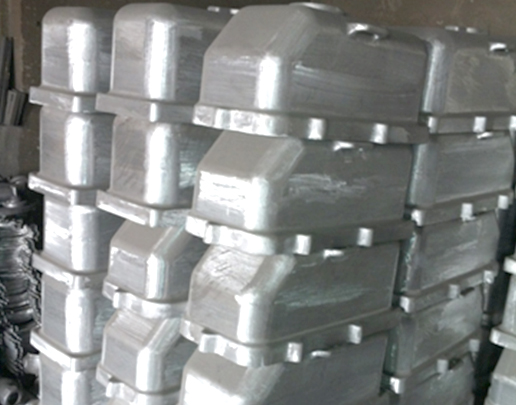
In modern manufacturing, there are various parts forming processes, including casting, forging, stamping, machining, 3D printing, etc. Casting, as one of the ancient metal forming processes, still holds an important position in industrial production today.
1、 Economic advantage
1. High utilization rate of raw materials
The casting process can directly inject molten metal into the mold to form, avoiding the waste of a large amount of material being removed by cutting in forging, machining and other processes. Especially for parts with complex shapes, casting can achieve near net shape production, with material utilization rates typically exceeding 90%, while machining may only be 50-60%.
2. Relatively low equipment investment
Compared to other processes that require large forging equipment or precision CNC machines, the one-time investment in casting equipment is usually lower. Especially for sand casting, the cost of molds is much lower than that required for precision forging, making it suitable for small and medium-sized enterprises to adopt.
3. Significant cost advantage per unit
In mass production, the single piece cost of Dalian castings is lower than that of machined parts. Taking automobile engine cylinder blocks as an example, the cost of casting production may only be 1/3 to 1/2 of machining from the blank.
2、 Design flexibility advantage
1. Ability to form complex shapes
The prominent advantage of casting technology lies in its ability to produce parts with complex internal cavities, curved surfaces, and irregular structures, which are difficult or impossible to achieve with other processes. For example, turbine engine blades, automotive engine cylinder blocks, artistic castings, etc., their complex geometric shapes can only be formed in one go through casting.
2. The overall structural design may
Casting can achieve the overall molding of multiple components, reducing the assembly process. Traditionally, automotive steering knuckles are assembled from multiple forgings, but now they can be integrated through casting, which not only improves strength but also reduces weight.
3. Flexible handling of wall thickness changes
Castings can be designed with different wall thicknesses in different parts, thickening where strength is required and thinning where lightweight is needed. This flexibility is difficult to achieve in homogeneous material machining.
3、 Material adaptability advantage
1. Wide selection of materials
Almost all metal materials can be formed by casting, including various cast iron, cast steel, aluminum alloys, copper alloys, magnesium alloys, zinc alloys, etc. Especially for certain high alloy materials, such as high manganese steel and nickel based high-temperature alloys, forging processing is difficult, while casting is relatively easy to achieve.
2. Adjustable material properties
By controlling the casting process parameters, the grain structure and mechanical properties of the material can be adjusted in a targeted manner. For example, ductile iron can achieve mechanical properties similar to steel through spheroidization treatment, which is difficult to achieve by other processes.
3. Composite material casting may
The casting process can achieve the preparation of metal based composite materials, such as aluminum based silicon carbide composite materials, by directly mixing the reinforcing phase into the molten metal and casting it to obtain special performance combinations.
4、 Adaptability advantage of production scale
1. Suitable for large-scale production
For the production of automobiles, household appliances, and other products that require hundreds of thousands or even millions of pieces, casting (especially die-casting) has unparalleled efficiency advantages. Modern die-casting machines can produce hundreds of pieces per hour with stable quality.
2. Small batch production is equally economical
Compared with stamping and injection molding that require expensive molds, sand casting, investment casting and other processes are also suitable for small-scale production. The mold cost is low and the production cycle is short, making it suitable for sample trial production or customized production.
3. Extremely wide size range
Casting can produce precision parts weighing from a few grams to large castings weighing hundreds of tons, such as ship propellers, turbine runners, machine tool beds, etc. This size span is incomparable to other processes.
5、 Special performance advantages
1. Excellent shock absorption performance
The graphite phase or micro pores in castings (especially cast iron parts) can absorb vibration energy, giving castings excellent shock absorption performance, which is not present in forged and machined parts. Therefore, machine tool beds, engine cylinder blocks, and other components are often cast using casting techniques.
2. Good wear resistance
By controlling the casting process, a microstructure with special wear resistance can be obtained. For example, the wear resistance of high chromium cast iron can be several times higher than that of ordinary steel, making it particularly suitable for wear-resistant parts such as mining machinery and cement machinery.
3. Isotropic performance
Unlike forged parts, which exhibit significant anisotropy, excellent castings have similar performance in all directions, which is very advantageous for the design of parts that can withstand multi-directional stress.
6、 New advantages brought by technological development
1. Progress in precision casting technology
Modern investment casting, lost foam casting and other processes can achieve a casting size accuracy of CT4-6 level, with a surface roughness Ra of 3.2-6.3 μ m, which is close to the machining level and greatly expands the application range of casting.
2. Application of simulation technology
Computer simulation of the casting process can predict defect locations, optimize process parameters, improve casting quality and yield, which is a technical advantage that traditional "trial and error methods" cannot match.
3. Automation and Intelligence
Modern casting workshops have achieved a high degree of automation, with full process automation control from melting, pouring to cleaning, ensuring consistency in product quality and improving production efficiency.
7、 Advantages of combining with other processes
1. Casting forging composite process
Casting a nearly shaped billet before local forging combines two technological advantages, reducing material waste and improving the mechanical properties of key parts.
2. Integration of casting and machining
Modern foundries are often equipped with machining centers to achieve seamless integration between casting and machining, leveraging the shape advantages of casting and the precision advantages of machining.
3. Combination of additive manufacturing and casting
The combination of 3D printing sand or wax mold technology with traditional casting further enhances the design freedom and rapid response capability of casting.
The casting process has undergone thousands of years of development and still maintains an irreplaceable position in modern manufacturing. Its comprehensive advantages in terms of economy, design flexibility, material adaptability, and production scale adaptability make it widely used in fields such as automotive, aerospace, energy equipment, and mechanical manufacturing. With the continuous development of new processes, materials, and technologies, the boundary between casting and other forming processes is gradually blurred, and more innovative solutions are generated through their integration. In the future, casting technology will continue to leverage its unique advantages while absorbing the strengths of other advanced manufacturing technologies, providing more diverse choices for modern manufacturing.