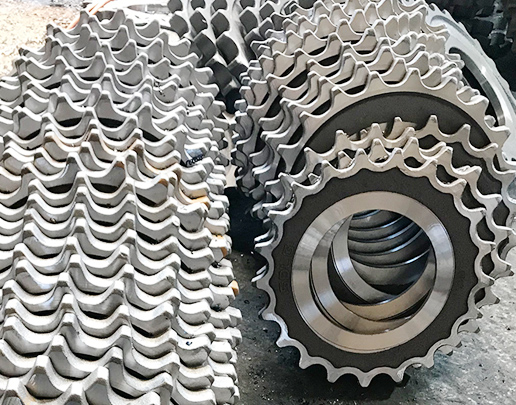
Dalian marine components are an important part of ship construction and operation, and their quality and performance directly affect the safety, reliability, and economy of ships. With the development of the global shipping industry, the market and technology for marine components are also constantly advancing. In the future, marine components will develop towards a more environmentally friendly, efficient, and intelligent direction, providing more reliable and advanced solutions for the shipbuilding industry.
The maintenance and upkeep of marine components are key to ensuring the long-term safe operation of ships. Mainly including the following aspects: Regular inspection: Regularly inspect ship components to promptly identify and repair potential problems, and prevent the occurrence of malfunctions. Cleaning and lubrication: Regularly clean the surface of components, remove dirt and corrosive substances, and provide necessary lubrication to reduce wear and friction. Replacement and update: For aging, damaged, or degraded components, they should be replaced or updated in a timely manner to ensure the normal operation of the vessel.
What are the surface treatment processes for marine components in Dalian?
plating
Process principle: Using the principle of electrolysis to deposit a layer of metal or alloy coating on the surface of the component. Using the component as a cathode, place it in an electrolyte containing the desired metal ions, and apply an external current to reduce the metal ions to metal atoms on the surface of the component, forming a uniform and dense coating.
Features and scope of application: It can achieve good corrosion resistance, wear resistance, and decorative properties. Commonly used electroplated metals include zinc, cadmium, nickel, chromium, etc. Galvanized coating is suitable for general marine steel parts, such as ship structural components, pipelines, etc., and can effectively prevent seawater corrosion; The cadmium plating layer has better corrosion resistance and is commonly used for components that can withstand high stress and friction, such as ship bolts, nuts, etc; Nickel plating and chrome plating are commonly used for components that require high hardness and smoothness, such as ship pump shafts, rudder stocks, etc.
Thermal spraying
Process principle: Heat metal or non-metal materials to a molten or semi molten state, atomize and spray them onto the surface of the components through high-speed airflow, and form a coating. According to different heat sources, it can be divided into flame spraying, plasma spraying, arc spraying, etc.
Characteristics and scope of application: It can prepare coatings with various properties, such as wear resistance, corrosion resistance, high temperature resistance, etc. It can form a thicker coating on the surface of the component, with less restriction on the shape and size of the component. For example, spraying ceramic coatings on the surfaces of components such as pistons and cylinder liners in marine diesel engines can improve their wear resistance and high temperature resistance; Spraying metal ceramic coating on the surface of ship propellers can enhance their resistance to cavitation and corrosion.
Painting
Process principle: Apply the coating on the surface of the component, and after drying and curing, form a protective film. Coatings are mainly composed of film-forming substances, pigments, solvents, and additives. The painting methods include brushing, spraying, dipping, rolling, etc.
Characteristics and scope of application: It has good decorative and corrosion resistance, and can effectively prevent components from being corroded by seawater, salt spray, ultraviolet rays, etc. Widely used in various parts of ships, such as hull shell, cabin interior, deck, etc. For different parts and usage environments, different types of coatings can be selected. For example, anti fouling paint on the bottom of a ship can prevent marine organisms from adhering and improve the navigation efficiency of the ship; Deck paint has good wear resistance and slip resistance, ensuring personnel safety.
Chemical plating
Process principle: In the absence of external current, metal ions in the plating solution are reduced and deposited on the surface of the component using a chemical reducing agent to form a coating.
Features and scope of application: It can obtain uniform coating on the surface of components with complex shapes, deep holes or blind holes. The electroless nickel phosphorus alloy coating has good corrosion resistance, wear resistance, and hardness, and is commonly used in the shell of marine electronic equipment, hydraulic components, etc. It can effectively prevent corrosion and improve service life.
Phosphating
Process principle: Immerse the components in a solution containing phosphate, and form a layer of phosphate chemical conversion film on their surface through chemical reaction.
Characteristics and scope of application: Phosphating film has good corrosion resistance, lubricity, and adsorption properties, and can be used as the bottom layer of coating to improve the adhesion and corrosion resistance of the coating. Commonly used for pre-treatment of marine steel components, such as ship structural components, mechanical parts, etc., it can effectively prevent rusting of components during storage and transportation, and provide a good foundation for subsequent coating processes.
Blackening treatment
Process principle: By chemical or electrochemical methods, a black oxide film is formed on the surface of the component. The commonly used methods include alkaline oxidation and acidic oxidation.
Characteristics and scope of application: Blackened parts have certain corrosion resistance and decorative properties, while reducing light reflection. Commonly used for small mechanical parts and instrument components in ships, it can improve the appearance quality of the parts and prevent rust to a certain extent.
Marine components refer to various equipment and parts used for ship construction, maintenance, and operation. These components cover various systems of the ship, including power systems, navigation systems, communication systems, safety systems, hull structures, etc. The quality and performance of marine components directly affect the safety, reliability, and economy of ships. Therefore, the design, manufacturing, and selection of marine components need to strictly follow international and industry standards to ensure the normal operation of ships in various environments.
Power system components: including engine, turbine, transmission device, thruster, etc. These components are the core of the ship, responsible for providing power and ensuring the normal navigation of the vessel. Navigation and communication equipment: including radar GPS、 Sonar, wireless communication equipment, etc. These devices assist the crew in navigation, positioning, and communication, ensuring the safety and accuracy of the vessel during navigation. Ship structural components: including hull, deck, bulkheads, keel, etc. These components form the basic framework of the ship, ensuring the strength and stability of the hull.