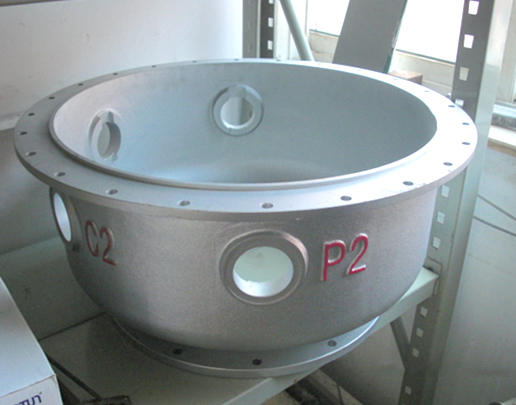
As the foundation of modern industry, the technology and application level of Dalian castings directly reflect the development level of the manufacturing industry. With the continuous emergence of new materials, processes, and technologies, the foundry industry will continue to provide high-quality and high-performance components for various fields, promoting the progress of industrial technology and sustainable economic development. In the future, the foundry industry will continue to move forward on the path of efficiency, environmental protection, and intelligence, injecting new vitality into the global manufacturing industry.
The wall thickness of castings should be as uniform as possible to avoid uneven thickness, in order to reduce stress concentration and defects such as shrinkage and porosity. Rounded corner transition: The corners of castings should be designed as rounded corners to avoid sharp corners and reduce stress concentration and crack formation. When designing castings, the draft angle should be considered to facilitate the removal of castings from the mold, reduce mold wear and deformation of castings. For large or thin-walled castings, reinforcing ribs should be designed to increase their strength and stiffness, reduce deformation and crack formation.
List some commonly used non-destructive testing techniques for Dalian castings
1、 Penetrant Testing (PT)
Principle: Using liquid penetrant to infiltrate surface opening defects and display traces through imaging agent adsorption.
Category:
Color penetration: Observe red defect display under natural light (suitable for on-site inspection).
Fluorescence penetration: Observe fluorescence display under ultraviolet (UV) light (higher sensitivity, suitable for precision parts).
Scope of application:
Surface opening defects (such as cracks, pores, and looseness) in non porous materials (metals, ceramics, etc.).
Typical applications: Aluminum alloy die-casting parts, stainless steel valve bodies, aircraft engine blades.
Advantages: Simple operation, low cost, and the ability to detect micrometer level defects.
Disadvantage: Unable to detect internal defects or closed defects, requiring pre cleaning of the surface.
2、 Magnetic Particle Testing (MT)
Principle: Apply a magnetic field to ferromagnetic materials (such as steel and cast iron), and magnetic powder is adsorbed by leakage at the defect to form a display.
Category:
Dry powder method: Direct spraying of magnetic powder, suitable for high temperature or rough surfaces.
Wet powder method: Magnetic powder is suspended in the carrier liquid, with higher sensitivity and suitable for fine defects.
Scope of application:
Surface and near surface defects of ferromagnetic materials (depth ≤ 2mm), such as cracks in gears, crankshafts, and machine tool beds.
Advantages: Fast detection speed and intuitive defect display.
Disadvantage: Only applicable to ferromagnetic materials, requiring removal of surface coatings or thick oxide scales.
3、 Ultrasonic Testing (UT)
Principle: Defects are detected by the reflection and attenuation characteristics of ultrasonic waves propagating inside the material.
Category:
Pulse reflection method: Determine the size of defects based on the amplitude of defect echoes (commonly used).
Penetration method: Defects are determined by signal attenuation at the receiving end (suitable for thin-walled components).
Scope of application:
Internal defect detection (such as shrinkage, slag inclusion, and incomplete fusion of welds) is particularly suitable for thick walled castings (such as large cast steel parts and ductile iron crankshafts).
It can measure wall thickness and evaluate the coarseness of material grains (such as ultrasonic attenuation method).
Advantages: Large detection depth (up to tens of centimeters), low cost.
Disadvantages: Requires coupling agents (such as engine oil and water), making it difficult to detect curved surfaces or complex structures, and relying on the experience of operators.
4、 Radiographic Testing (RT)
Principle: By using X-rays or gamma rays to penetrate the casting, defects are caused by density differences, resulting in changes in the grayscale of the film or image.
Category:
X-ray inspection: suitable for medium thickness castings (steel parts ≤ 50mm, aluminum parts ≤ 150mm).
Gamma ray detection: used for thick and large items (such as nuclear electroplated steel parts), with stronger radioactivity and strict protection required.
Scope of application:
The quantitative analysis of internal volume defects (porosity, slag inclusion, shrinkage) is widely used in aerospace and pressure vessel castings.
Advantages: The detection results can be archived (film or digital images), and the defect localization accuracy is high.
Disadvantages: Complex equipment, high cost, radiation risk, and easy overexposure of thin parts.
Castings play an important role in modern industry, with the following main application areas: mechanical manufacturing: Castings are the core components of mechanical equipment, such as machine tool beds, gearboxes, bearing seats, etc. Automotive industry: Key components such as engine cylinder blocks, crankshafts, and wheel hubs are manufactured using casting technology. Aerospace: High precision and high-performance components such as aircraft engine blades and turbine disks are typically produced using casting processes. Energy industry: Large castings such as wind turbine hubs and water and electricity equipment impellers are important components of energy equipment.
The material selection of castings directly affects their performance and application range. Common casting materials include cast iron: Cast iron has good casting performance, wear resistance, and shock absorption, and is widely used in fields such as mechanical manufacturing, automobiles, and construction. Common cast iron includes gray cast iron, ductile iron, malleable cast iron, etc. Cast steel: Cast steel has high strength and toughness, suitable for producing parts that can withstand large loads. Common cast steels include carbon steel, alloy steel, stainless steel, etc. Aluminum alloy: Aluminum alloy has the advantages of low density, high strength, and good corrosion resistance, and is widely used in aerospace, automotive, electronics, and other fields.