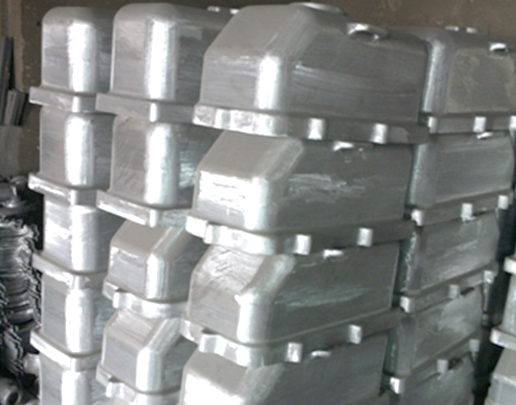
As an important basic component of modern industry, Dalian castings are constantly expanding in terms of their technological level and application scope. With the introduction of new materials, new processes, and new technologies, the foundry industry will usher in more development opportunities. In the future, foundry enterprises need to continue to work hard in technological innovation, quality improvement, environmental compliance, and other aspects to meet market demand and promote industry progress.
With the continuous development of casting technology, modern casting processes can achieve high dimensional accuracy, reduce the workload of subsequent processing, and improve production efficiency and material utilization. The dimensional accuracy of castings produced by processes such as investment casting and pressure casting can reach IT8-IT12 levels.
How to ensure the surface quality of castings in Dalian?
1、 Raw materials and smelting control
Purity of metal materials
Strictly control the impurity content (such as sulfur, phosphorus, oxides) of furnace materials (such as scrap steel, pig iron, alloys, etc.) to avoid surface defects (such as pores, sand inclusions) caused by impurity segregation or oxidation.
Example: In aluminum alloy casting, excessive hydrogen content in the aluminum liquid can cause surface pinholes, which need to be removed by refining agents (such as hexachloroethane).
Optimization of Smelting Process
Control the melting temperature and holding time to avoid excessive oxidation of the metal liquid and the formation of oxide scale (such as wrinkling caused by insufficient melting temperature of cast iron).
Using covering agents (such as wood ash, glass material) to isolate the air and reduce liquid level oxidation; Use refining agents (such as C ₂ Cl ₆ for aluminum and silicon calcium alloys for steel) to remove slag and gases.
2、 Styling and Core Manufacturing Process Control
Selection of modeling materials
Sand casting:
Using quartz sand with uniform particle size and high refractoriness, combined with binders such as bentonite and resin, to improve the strength and permeability of the molding sand, and prevent sand particles from falling off and forming sand holes.
Example: Resin sand mold has a high surface finish and is suitable for high-precision castings; Attention should be paid to the yielding of water glass sand molds to prevent surface cracking during casting shrinkage.
Metal mold casting:
The surface of the mold needs to be finely processed (roughness Ra ≤ 1.6 μ m) and coated with thermal insulation coatings (such as zinc oxide and aluminum oxide) to avoid metal liquid washing the mold and causing sticking or surface roughness.
Design operation specifications
The sand mold has uniform compactness, avoiding local looseness that may cause metal liquid to infiltrate and form mechanical sand adhesion; To prevent damage to the sand mold during molding, repair the surface with repair paste (such as graphite powder+adhesive) if necessary.
The core needs to be accurately positioned to avoid flying edges or gaps caused by offset during box closing.
3、 Pouring system design
Gate position and size
The gate should avoid facing directly towards the sand mold wall or core to prevent high-speed flushing of the metal liquid and sand flushing; Adopting bottom injection or stepped gate to reduce liquid flow impact and splashing.
Example: Large cast steel parts use bottom injection gates, which allow for smooth filling of the metal liquid, reducing surface oxidation and porosity.
Riser and cold iron setting
The riser needs to ensure the shrinkage effect and avoid the formation of pits on the surface of the casting due to shrinkage; Cold iron is used to control the solidification sequence and prevent local overheating from causing shrinkage or surface roughness.
4、 Cooling and demolding control
Cooling speed adjustment
In sand casting, premature unboxing can cause cracks or white cast structures (cast iron) on the surface of the casting due to rapid cooling; Opening the box too late may cause surface corrosion due to moisture absorption in the sand mold.
Metal mold casting requires controlling the mold temperature (such as preheating aluminum alloy molds to 150-250 ℃) to avoid surface stress cracking caused by rapid cooling.
Use of release agent
Metal molds and die-casting molds need to be sprayed with efficient release agents (such as silicon-based and graphite based coatings), with uniform thickness and not too thick, otherwise carbon deposits or coating inclusions may occur.
5、 Post processing technology
Surface cleaning
Mechanical cleaning:
Sandblasting/shot blasting: using quartz sand and steel shot to remove surface sand and oxide scale, suitable for cast iron and steel parts (such as valve housings);
Drum cleaning: Adding star shaped abrasive for rolling friction to remove burrs, suitable for small and medium-sized aluminum alloy and copper alloy parts.
Chemical cleaning:
Acid washing (such as sulfuric acid or hydrochloric acid solution) to remove oxide scale from stainless steel and copper alloy castings;
Alkali boiling (such as NaOH solution) is used to clean the residual release agent and oxide on the surface of aluminum castings.
surface finish
Grinding and Polishing: Use a sand belt machine and polishing wheel to remove burrs and burrs, and improve surface smoothness (such as bathroom hardware castings);
Electrochemical polishing: Dissolving micro protrusions on the surface through electrolysis, suitable for precision parts such as aerospace castings.
surface protection
Spray anti rust paint, electroplating (such as galvanizing, chrome plating) or hot-dip galvanizing to prevent surface corrosion of castings (such as outdoor cast iron manhole covers);
Aluminum alloy parts can be anodized to form a dense oxide film, improving corrosion resistance and aesthetics.
Casting technology can produce workpieces with complex shapes and fine structures, especially suitable for parts that are difficult to form through other processing methods. For example, engine cylinder block, pump body, turbine blades, etc. Compared to other manufacturing processes such as forging and cutting, casting has a lower material waste rate and higher production efficiency, making it particularly suitable for large-scale production.
During the casting production process, various key links are monitored, such as melting temperature, pouring temperature, molding compactness, cooling rate, etc., to promptly detect and correct deviations and ensure the stability of process parameters. Using non-destructive testing methods such as ultrasonic testing, magnetic particle testing, penetrant testing, and radiographic testing, the castings are inspected to detect internal and surface defects such as cracks, pores, inclusions, etc., ensuring that the quality of the castings meets the standards.