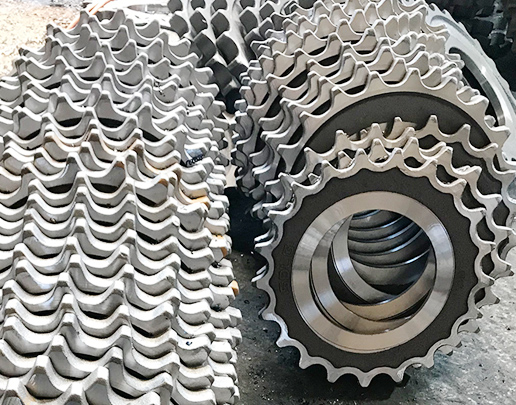
The replacement cycle of marine components in Dalian is an important part of ship maintenance and management, which directly affects the safety, operational efficiency, and economic benefits of the ship. Scientifically and reasonably determining the replacement cycle can not only extend the service life of equipment, but also avoid accidents caused by component failure. The following are common methods and considerations for determining the replacement cycle of marine components.
1、 According to the manufacturer's recommendations
Manufacturer's Manual
Manufacturers of marine components typically provide recommended replacement cycles or service lives in their product manuals. These suggestions are based on laboratory testing and practical experience, and are important reference for determining the replacement cycle.
Technical Parameter
Manufacturers will also provide technical parameters of the components, such as maximum working hours, operating environment requirements, etc. Based on these parameters, the replacement cycle of components can be preliminarily estimated.
2、 Based on actual operating conditions
work environment
The operating environment of a ship has a direct impact on the degree of wear and tear of its components. For example, in environments with high temperature, high humidity, and severe salt spray corrosion, the replacement cycle of components should be appropriately shortened.
Workload
Components that operate at high loads (such as the main engine and propeller) wear out faster, and the replacement cycle should be shorter than components that operate at low loads.
run time
By recording the actual running time of the components (such as hours or mileage), it is possible to more accurately determine whether they need to be replaced.
3、 Based on monitoring and detection data
regular inspection
By regularly inspecting the wear, corrosion, cracks, and other conditions of components, potential problems can be detected in a timely manner, and the replacement cycle can be adjusted based on the inspection results.
Condition monitoring
Utilize sensors and monitoring systems to collect real-time operational data of components, such as vibration, temperature, pressure, etc., and predict their remaining lifespan through data analysis.
NDT
Using non-destructive testing techniques such as ultrasonic and magnetic particle inspection, evaluate the internal damage of components and provide scientific basis for replacement cycles.
4、 Based on historical experience and statistics
HISTORICAL DATA
By analyzing the replacement records of ships or components of the same type, summarize the replacement cycle with reference value.
Fault statistics
Statistically analyze the failure rate and failure modes of components, identify their failure patterns, and optimize replacement cycles accordingly.
Industry standards
Refer to the relevant standards and specifications of the International Maritime Organization (IMO) and classification societies (such as CCS, DNV, etc.) to determine the replacement cycle of components.
5、 Consider economy and safety
COST-BENEFIT ANALYSIS
Short replacement cycles can increase maintenance costs, while long replacement cycles may increase the risk of failure. We need to find a balance between cost and risk.
Safety priority
For key components such as servos, anchors, etc., safety should be the main consideration and the replacement cycle should be appropriately shortened.
Inventory management
Reasonably arrange the procurement and inventory of components based on the replacement cycle to avoid ship suspension due to stock shortages.
6、 Other influencing factors
technological advances
With the application of new materials and processes, the service life of components may be extended, and the replacement cycle needs to be adjusted accordingly.
Regulatory changes
The requirements for ship maintenance under international or domestic regulations may change, and the replacement cycle needs to be updated in a timely manner.
Ship type and purpose
Different types and purposes of ships (such as cargo ships, passenger ships, and engineering ships) have different requirements for components, and the replacement cycle should also be different.
Precautions in practical applications
dynamic adjustment
The replacement cycle is not fixed and should be dynamically adjusted according to the actual situation. For example, after severe weather or special tasks, the replacement cycle of critical components should be shortened.
Record and track
Establish a comprehensive record of component replacement, track its usage and replacement effectiveness, and provide a basis for subsequent decision-making.
staff training
Strengthen the training of maintenance personnel to improve their understanding and judgment ability of component replacement cycles.
Determining the replacement cycle of marine components is a complex process that requires comprehensive consideration of multiple factors such as manufacturer recommendations, actual operating conditions, monitoring data, historical experience, economy, and safety. Through scientific management methods and technological means, the service life of components can be effectively extended, maintenance costs can be reduced, and the safe and efficient operation of ships can be ensured.