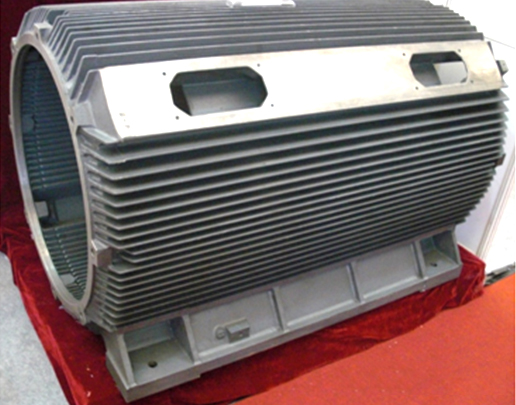
During the installation process of the Dalian motor casing, some misunderstandings often occur due to improper operation or lack of experience. These misconceptions not only affect the normal operation of the motor, but may also lead to equipment damage, reduced efficiency, and even pose safety hazards. The following are some common misconceptions and countermeasures for motor housing installation, for reference.
1. Neglecting the preparation work before installation
Misconception: Many people often start installing the motor casing directly, ignoring the preparation work before installation, such as cleaning, inspection, and alignment.
Impact: This may result in residual foreign objects inside the motor casing, affecting motor operation, or causing vibration and noise due to uneven installation surfaces.
Response measures:
Before installation, thoroughly clean the interior and installation surface of the motor casing to ensure that there is no dust, oil stains, or foreign objects.
Check the flatness of the motor casing and installation base, and if necessary, polish or adjust them.
Confirm the compatibility between the motor casing and other components of the motor, ensuring that the dimensions and specifications meet the requirements.
2. Incorrect alignment of motor housing and motor shaft
Misconception: Failure to carefully align the motor housing and motor shaft during installation resulted in the centerline of the shaft and housing not being aligned.
Impact: This misalignment can cause vibration, noise, and even accelerate bearing wear during motor operation, affecting motor life.
Response measures:
Use professional centering tools (such as laser centering instruments or dial gauges) to ensure that the centerline of the motor housing is aligned with the motor shaft.
Check multiple times during installation to ensure alignment accuracy meets requirements.
For large motors, it is recommended to conduct a trial run after installation to observe for any abnormal vibrations or noise.
3. Improper operation of tightening bolts
Misconception: When installing the motor housing, the tightening sequence and force of the bolts are not standardized, resulting in uneven stress on the housing.
Impact: This may cause deformation of the motor casing, inadequate sealing, and even lead to oil or gas leakage problems.
Response measures:
Operate according to the bolt tightening sequence provided by the manufacturer, usually using diagonal or cross sequence.
Use a torque wrench to ensure that the tightening force of each bolt is consistent, avoiding over tightening or over loosening.
After tightening, check the shell again for flatness and make adjustments if necessary.
4. Neglecting the installation of seals
Misconception: Improper installation or inspection of seals (such as O-rings, gaskets, etc.) when installing the motor casing.
Impact: This can cause problems such as oil leakage, gas leakage, or dust ingress during motor operation, affecting motor performance and lifespan.
Response measures:
Before installation, check whether the seals are intact and undamaged. If there is wear or aging, they should be replaced in a timely manner.
Ensure that the seal is correctly installed in the designated position, avoiding distortion or misalignment.
After installation, conduct a sealing test to ensure no leakage.
5. Failure to consider thermal expansion factors
Misconception: When installing the motor casing, the thermal expansion effect generated during motor operation was not taken into account.
Impact: This may cause deformation or stress in the motor casing at high temperatures, affecting the stability of motor operation.
Response measures:
Choose the appropriate installation gap to ensure that the motor casing has sufficient space during thermal expansion.
Use high-temperature resistant materials or designs to reduce the impact of thermal expansion on the motor casing.
After installation, conduct a hot running test to observe if there is any abnormal deformation in the motor casing.
6. Ignore the grounding of the motor casing
Misconception: Improper or poor grounding when installing the motor casing.
Impact: This may cause static electricity or electromagnetic interference during motor operation, and even lead to electric shock accidents.
Response measures:
Ensure that the motor casing is reliably connected to the grounding wire and that the grounding resistance meets the standard requirements.
Use specialized grounding bolts and wires, avoid using ordinary bolts or temporary wiring.
After installation, use a grounding resistance tester to check and ensure good grounding.
7. The protection level of the motor casing has not been considered
Misconception: When installing the motor casing, the appropriate protection level (such as IP level) was not selected according to the usage environment.
Impact: This may cause damage to the motor in humid, dusty, or corrosive environments, affecting its normal operation.
Response measures:
Choose a motor casing that meets the protection level requirements based on the working environment of the motor.
During the installation process, ensure that all protective measures (such as seals, ventilation openings, etc.) are installed correctly.
Regularly check the protective performance of the motor casing and replace damaged components in a timely manner.
8. Failure to conduct testing and debugging after installation
Misconception: After installing the motor casing, it was put into use without necessary testing and debugging.
Impact: This may result in potential installation issues going undetected, affecting motor performance and safety.
Response measures:
After installation, conduct a no-load test run to observe whether there are any abnormal vibrations, noises, or heating in the motor casing.
Check the sealing, grounding, and protective performance of the motor casing to ensure compliance with requirements.
For large or critical equipment, it is recommended to conduct load testing to ensure that the motor operates at full load without any abnormalities.
9. Neglecting the maintenance and upkeep of the motor casing
Misconception: After installing the motor casing, if regular maintenance and upkeep are not carried out, it is believed that the installation can be completed once and for all.
Impact: This may cause the motor casing to gradually age, wear, or damage, affecting the long-term operation of the motor.
Response measures:
Develop a regular maintenance plan to check the sealing, fastening bolts, and protective performance of the motor casing.
Timely clean the dust and dirt on the surface of the motor casing to prevent them from affecting heat dissipation and protective performance.
For vulnerable parts such as seals, bolts, etc., they should be replaced regularly to ensure the integrity of the motor casing.
The installation of motor casing is an important part of motor operation, and any small mistake may have a significant impact on motor performance and service life. By avoiding the common misconceptions mentioned above and strictly following the specifications, the installation quality of the motor casing can be ensured, and the operational efficiency and reliability of the motor can be improved. At the same time, regular maintenance and upkeep are also key to ensuring the long-term stable operation of the motor.