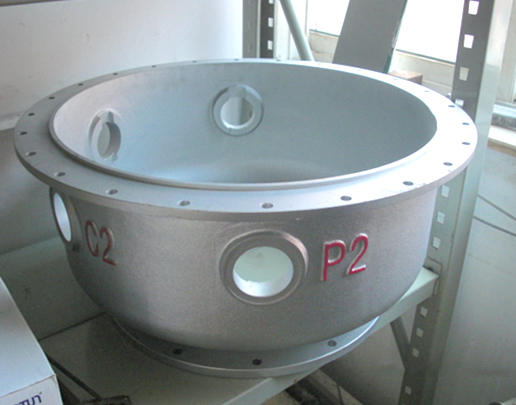
The common problems in the production process of castings in Dalian cover multiple stages, including raw material selection, mold design, melting, pouring, cooling, and subsequent processing. These issues not only affect the quality of castings, but may also lead to decreased production efficiency, increased costs, and even safety accidents. The following are common problems, their causes, and solutions in the production process of castings.
1. Pores
Pores are one of the common defects in castings, manifested as gas holes appearing inside or on the surface of the casting. The main reasons for the formation of pores are as follows:
During the melting process, the gas is not completely discharged: the molten metal may absorb gases such as hydrogen and nitrogen during the melting process. If these gases are not completely expelled before pouring, they will form pores in the casting.
Unreasonable design of pouring system: Improper design of pouring system, such as too small gate or too fast pouring speed, can cause the metal liquid to be entrained with gas during the flow process.
Poor exhaust of the mold: The mold exhaust is not smooth, and the gas cannot be discharged in a timely manner, which can also form pores in the casting.
resolvent:
Optimize the smelting process to ensure that the gas in the molten metal is fully discharged.
Reasonably design the pouring system, control the pouring speed and gate size.
Improve the exhaust system of the mold to ensure smooth gas discharge.
2. Shrinkage and looseness
Shrinkage and porosity are defects caused by the volume shrinkage of molten metal during solidification. Shrinkage is usually manifested as larger voids inside the casting, while porosity is small and dispersed voids.
Unreasonable solidification sequence: If the solidification sequence of each part of the casting is not consistent, the first solidified part will hinder the shrinkage of the later solidified part, resulting in shrinkage or looseness.
Excessive or insufficient pouring temperature: Excessive pouring temperature can prolong the solidification time of the metal liquid and increase the risk of shrinkage; If the pouring temperature is too low, it may lead to poor fluidity of the metal liquid and difficulty in replenishing shrinkage.
Unreasonable casting structure design: Excessive differences in casting wall thickness or the presence of hot spots can easily lead to shrinkage or porosity.
resolvent:
Optimize the structural design of castings to avoid significant differences in wall thickness and overheating.
Control the pouring temperature to ensure good fluidity and moderate solidification time of the metal liquid.
Adopting a reasonable riser design to ensure sufficient replenishment.
3. Slag inclusion
Slag inclusion refers to the presence of non-metallic impurities such as slag, oxides, etc. inside or on the surface of castings. The main reasons for slag inclusion are as follows:
Impurities are not completely removed during the melting process: Metal liquid may mix with slag, oxides, and other impurities during the melting process. If these impurities are not removed in time, they will form slag inclusions in the castings.
Unreasonable design of pouring system: Improper design of pouring system, such as unreasonable gate position and too fast pouring speed, may lead to slag being sucked into the molten metal.
Unclean mold cavity: There are residual impurities such as sand particles and paint in the mold cavity, which can also cause slag inclusion.
resolvent:
Strengthen slag removal during the smelting process to ensure the purity of the molten metal.
Optimize the design of the pouring system to prevent slag from being drawn into the molten metal.
Keep the mold cavity clean and regularly clean any residual impurities.
4. Cracks
Cracks are common defects in castings, manifested as surface or internal cracks. The main reasons for the occurrence of cracks are as follows:
Uneven cooling of castings: During the cooling process, if there is a significant difference in cooling rate between different parts of the casting, thermal stress will be generated, leading to cracks.
Unreasonable design of casting structure: The casting structure has problems such as sharp corners and large differences in wall thickness, which can easily cause stress concentration and lead to cracks.
Unreasonable composition of molten metal: Excessive or insufficient content of certain elements in the molten metal may increase the brittleness of the casting and easily lead to cracking.
resolvent:
Optimize the structural design of castings to avoid sharp corners and significant differences in wall thickness.
Control the cooling rate to ensure even cooling of all parts of the casting.
Reasonably adjust the composition of the molten metal to ensure that the castings have good strength and toughness.
5. Deformation
Deformation refers to the shape change of a casting during cooling or subsequent processing, resulting in dimensions that do not meet the requirements. The main reasons for deformation include:
Uneven cooling: During the cooling process of castings, if the cooling speed of each part is not consistent, internal stress will be generated, leading to deformation.
Unreasonable mold design: Improper mold design, such as insufficient rigidity of the mold, uneven distribution of support points, etc., may cause deformation of the casting during the cooling process.
Improper subsequent processing: Improper operation during subsequent processing such as heat treatment and mechanical machining may also cause deformation of the casting.
resolvent:
Optimize the cooling process to ensure even cooling of all parts of the casting.
Reasonably design the mold to ensure its rigidity and even distribution of support points.
Control the subsequent processing technology to avoid casting deformation caused by improper operation.
6. Surface roughness
Surface roughness refers to problems such as unevenness and sand adhesion on the surface of castings, which affect the appearance quality of castings. The main reasons for surface roughness include:
Poor surface quality of molds: Rough or defective mold surfaces can lead to rough casting surfaces.
Uneven coating: Uneven or excessive coating of mold coating may result in rough surface of castings.
Excessive or insufficient pouring temperature: Excessive pouring temperature can lead to intensified reaction between the metal liquid and the mold surface, increasing surface roughness; If the pouring temperature is too low, it may lead to poor fluidity and rough surface of the metal liquid.
resolvent:
Improve the surface quality of the mold to ensure a smooth and defect free surface.
Apply mold coating evenly and control the thickness of the coating.
Reasonably control the pouring temperature to ensure good fluidity of the metal liquid.
7. Dimensional deviation
Dimensional deviation refers to the discrepancy between the actual size of the casting and the design size, which affects the assembly and use of the casting. The main reasons for size deviation include:
Mold wear: The mold will gradually wear out during use, leading to dimensional deviations in the castings.
Uneven cooling shrinkage: During the cooling process, if the shrinkage of each part of the casting is inconsistent, it can lead to dimensional deviations.
Improper subsequent processing: Improper operation during subsequent processing such as heat treatment and mechanical processing may also lead to dimensional deviations.
resolvent:
Regularly inspect and maintain molds, and promptly repair or replace worn molds.
Control the cooling process to ensure uniform shrinkage of all parts of the casting.
Strictly control the subsequent processing technology to ensure that the casting size meets the requirements.
The common problems in the production process of castings involve multiple links, each with its specific causes and solutions. In order to ensure the quality of castings, production enterprises need to strictly control every link from raw material selection, mold design, melting, pouring, cooling to subsequent processing, and timely discover and solve problems. By optimizing processes, strengthening management, and improving the technical level of operators, problems in the production process of castings can be effectively reduced, and production efficiency and product quality can be improved.