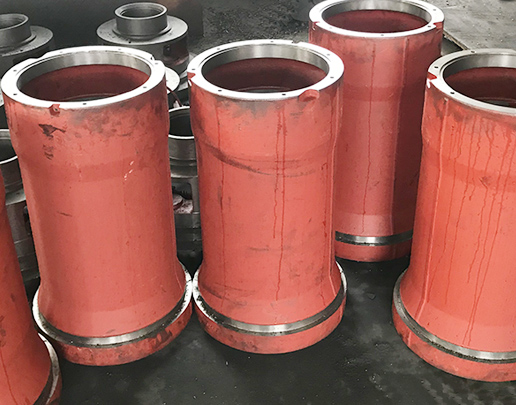
As an important component of the motor, the size and specifications of the Dalian motor casing directly affect the performance, installation, heat dissipation, protection level, and service life of the motor. Choosing the appropriate size and specifications for the motor casing requires comprehensive consideration of factors such as the type, power, installation environment, heat dissipation requirements, and protection level of the motor.
1. Motor type and power
The size of the motor casing is closely related to the type and power of the motor. Different types of motors (such as asynchronous motors, synchronous motors, DC motors, etc.) have different requirements for the motor housing. Motors with higher power usually require larger housings to accommodate more windings, iron cores, and heat dissipation devices.
Small motors: Motors with lower power (such as those in household appliances) typically use compact housings, smaller sizes, lighter weights, and are easy to install and maintain.
Medium sized motors: Industrial medium-sized motors (such as water pumps, fans, etc.) require larger casings to meet the requirements of heat dissipation and mechanical strength.
Large motors: The housing size of large motors (such as generator sets and heavy-duty machinery motors) is larger, usually using cast iron or steel plate welded structures to ensure sufficient strength and heat dissipation performance.
When selecting the size of the motor casing, reference should be made to the rated power, speed, torque, and other parameters of the motor to ensure that the casing can accommodate the internal components of the motor and meet operational requirements.
2. Installation environment and space limitations
The size of the motor casing also needs to consider the limitations of the installation environment. For example, in devices with limited space, such as robots and automated production lines, it is necessary to choose a compact motor housing to save space. In open environments such as mines and factories, the size of the motor casing can be appropriately enlarged to provide better heat dissipation and protection performance.
Compact design: suitable for space constrained scenarios such as servo motors, stepper motors, etc.
Modular design: easy to install and maintain, suitable for occasions that require frequent disassembly.
Customized design: Customize non-standard size motor housings according to special installation requirements.
3. Heat dissipation requirements
The motor generates heat during operation, and poor heat dissipation can lead to excessive temperature rise, affecting performance and lifespan. Therefore, the size design of the motor casing must consider the heat dissipation requirements.
Heat dissipation area: The larger the surface area of the motor casing, the better the heat dissipation effect. For high-power motors, it is usually necessary to increase the size of the housing to provide a larger heat dissipation area.
Heat dissipation structure: The motor casing can be designed with heat dissipation fins, fans, or water cooling devices to enhance the heat dissipation effect. These structures will increase the size of the shell, but can significantly improve heat dissipation efficiency.
Material selection: Materials with good thermal conductivity (such as aluminum alloy) can reduce the size of the shell while meeting the heat dissipation requirements.
4. Protection level
The size of the motor casing is also related to the protection level (IP level). The higher the protection level, the higher the requirements for the sealing and structural strength of the motor housing, which may lead to an increase in housing size.
Low protection level (below IP54): Suitable for dry and clean environments, the housing size can be smaller.
High protection level (IP65 or above): Suitable for humid, dusty, or corrosive environments, requiring a larger housing to accommodate sealing rings, protective covers, and other structures.
Explosion proof design: Motors used in flammable and explosive environments typically have larger housing sizes to meet explosion-proof requirements.
5. Mechanical strength and vibration
The motor casing needs to have sufficient mechanical strength to withstand vibrations, impacts, and loads during operation. Larger shells typically have higher strength and stability.
Material selection: Cast iron and steel shells have high strength and are suitable for high load and vibration situations, but their size and weight are relatively large.
Structural design: Improve the strength of the shell by strengthening ribs, thick walled design, etc., while optimizing dimensions to reduce weight.
Vibration reduction design: Integrating vibration reduction devices in the housing can reduce the impact of vibration on the motor, but may increase the size of the housing.
6. Standardization and compatibility
When selecting the size of the motor casing, standardized design should be given priority to ensure compatibility with existing equipment.
International standards such as IEC and NEMA have clear regulations on the size of motor casings, and selecting a casing that meets the standards facilitates installation and maintenance.
Industry standards: Different industries (such as automotive, aerospace, medical equipment) have specific requirements for the size and performance of motor housings, which need to be selected according to industry standards.
Compatibility: Ensure that the size of the motor housing matches the internal components of the motor, such as bearings and end caps, to avoid installation difficulties or operational failures.
7. Cost and Manufacturing Process
The size of the motor casing is also affected by cost and manufacturing process. Larger shells typically require more materials and more complex processing techniques, resulting in increased costs.
Material cost: Aluminum alloy shell is lightweight but expensive, while cast iron shell has lower cost but heavier weight.
Processing techniques: Casting, stamping, welding, and other processes have different limitations on the design of shell dimensions.
Batch production: For motors produced in large quantities, optimizing the housing size can reduce costs and improve production efficiency.
8. Future expansion and maintenance
When choosing the size of the motor casing, future expansion and maintenance needs also need to be considered.
Scalability: Reserve a certain amount of space for the motor casing to facilitate future upgrades or add functionality.
Maintainability: Choosing a shell design that is easy to disassemble and maintain can reduce downtime and maintenance costs.
The selection of motor housing size specifications is a comprehensive process that requires weighing various factors such as motor type, power, installation environment, heat dissipation requirements, protection level, mechanical strength, standardization requirements, cost, and future expansion. Reasonable selection of motor housing size can not only improve the performance and reliability of the motor, but also reduce costs and maintenance difficulties. In practical applications, it is recommended to work closely with motor design engineers and manufacturers to ensure that the selected motor housing size meets all technical requirements.