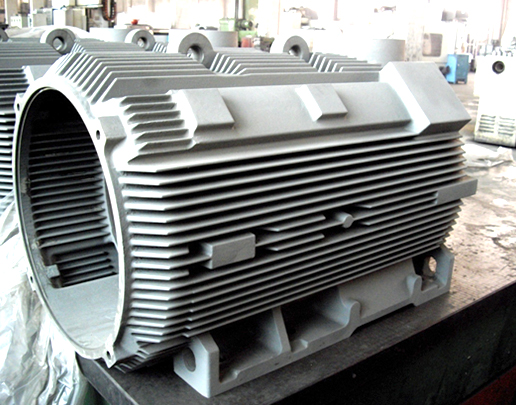
The lightweight design of Dalian motor casing is one of the important directions in the current development of motor technology. Its advantages are mainly reflected in the following aspects: improving motor performance, reducing energy consumption, optimizing material use, improving manufacturing processes, enhancing environmental benefits, and meeting the needs of specific application scenarios.
1. Improve motor performance
The lightweight design of the motor housing can significantly reduce the overall weight of the motor, thereby reducing the moment of inertia. The decrease in moment of inertia means that the energy loss of the motor is smaller and the response speed is faster when starting, stopping, or shifting. This is particularly important for application scenarios that require frequent start stop or rapid response, such as electric vehicles, robots, drones, etc. In addition, lightweight design can reduce the vibration and noise of the motor, improve the smoothness and reliability of operation.
2. Reduce energy consumption
The lightweight design of the motor housing directly reduces the overall weight of the motor, thereby reducing the load on the motor. Under the same power output, the motor needs to consume less energy, which helps to improve the energy efficiency ratio of the motor. Especially in the fields of electric vehicles, power tools, and household appliances, lightweight design can significantly extend battery life or reduce power consumption, thereby reducing usage costs.
3. Optimize material usage
Lightweight design is typically achieved through the use of high-strength, low-density materials such as aluminum alloys, magnesium alloys, composite materials, etc. These materials not only meet the strength and stiffness requirements of the motor casing, but also significantly reduce weight. In addition, lightweight design can also reduce material usage and production costs by optimizing structural design (such as topology optimization, thin-walled design, etc.).
4. Improve manufacturing processes
Lightweight design typically requires advanced manufacturing processes such as precision casting, extrusion molding, 3D printing, etc. These processes not only improve the manufacturing accuracy and consistency of motor casings, but also reduce processing steps and material waste, thereby lowering production costs. In addition, lightweight design can simplify the assembly process of motors and improve production efficiency.
5. Enhance environmental benefits
Lightweight design can significantly reduce the carbon emissions and resource consumption of motors by reducing material usage and energy consumption. This is of great significance for achieving sustainable development goals. In addition, lightweight design can extend the service life of the motor, reduce waste generation, and thus lower the impact on the environment.
6. Meet the needs of specific application scenarios
In certain specific application scenarios, the weight of the motor is a key factor. For example, in the aerospace field, the lightweight design of the motor housing can significantly reduce the overall weight of the aircraft, thereby improving flight performance and fuel efficiency. Lightweight design can improve the portability and user experience of portable devices such as power tools and medical equipment.
7. Improve market competitiveness
With the increasingly fierce market competition, lightweight design of motors has become an important competitive advantage. Lightweight design can not only improve the performance and quality of motors, but also reduce production and usage costs, thereby enhancing the market competitiveness of products. In addition, lightweight design can also meet consumers' demand for energy-saving and environmentally friendly products, enhance brand image and market recognition.
8. Promote technological innovation
Lightweight design requires the comprehensive application of knowledge and technology from multiple disciplines such as materials science, structural design, and manufacturing processes, which helps to promote innovation and development in motor technology. Through lightweight design, more efficient, environmentally friendly, and intelligent motor products can be developed, thereby promoting the progress of the entire industry.
9. Adapt to future development trends
With the global emphasis on energy conservation, emission reduction, and sustainable development, lightweight design of motors will become an important trend in the future development of motor technology. Lightweight design can not only meet current market demands, but also lay the foundation for future technological development. For example, in the field of electric vehicles, lightweight design will help achieve longer range and higher energy efficiency.
10. Improve user experience
Lightweight design can improve the portability and ease of use of motors, thereby enhancing the user experience. For example, in electric tools, lightweight design can reduce user fatigue and improve work efficiency. In household appliances, lightweight design can facilitate users' movement and installation, improving the convenience of use.
In summary, the lightweight design of motor housings has multiple advantages, including improving motor performance, reducing energy consumption, optimizing material usage, improving manufacturing processes, enhancing environmental benefits, meeting the needs of specific application scenarios, improving market competitiveness, promoting technological innovation, adapting to future development trends, and enhancing user experience. These advantages make lightweight design an important direction for the current development of motor technology and will have a profound impact on the development of the motor industry.