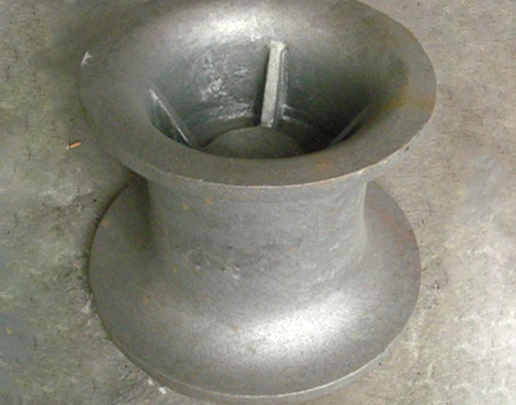
Quality inspection of castings in Dalian is an important step in ensuring that the castings meet design requirements, performance standards, and safe use. With the continuous advancement of casting technology, castings are widely used in fields such as automotive, aerospace, and mechanical manufacturing, and their quality directly affects the performance and lifespan of products. Therefore, the standards and methods for quality inspection of castings are crucial.
1、 Standard for quality inspection of castings
The standards for quality inspection of castings are mainly based on national or industry standards, such as GB/T, ISO, ASTM, etc. These standards cover aspects such as dimensional accuracy, surface quality, internal defects, and mechanical properties of castings. Here are some common standards:
Dimensional accuracy: The dimensional accuracy of castings is an important indicator to measure whether they meet the design requirements. Standards usually specify the dimensional tolerances, geometric tolerances, etc. of castings. For example, GB/T 6414-2017 "Dimensional tolerances and machining allowances for castings" specifies the dimensional tolerance grades and machining allowances for castings.
Surface quality: The surface quality of castings includes surface roughness, surface defects (such as pores, inclusions, cracks, etc.). Standards usually specify the allowable values of surface roughness and the allowable degree of surface defects. For example, GB/T 6060.1-2018 "Comparison of Surface Roughness Blocks for Casting Surfaces" provides comparison blocks for casting surface roughness.
Internal quality: The internal quality of castings mainly refers to internal defects such as shrinkage, porosity, inclusions, etc. Standards usually specify the allowable level and detection methods for internal defects. For example, GB/T 9445-2015 "Non destructive Testing - Magnetic Particle Testing of Steel Castings" specifies the methods and acceptance criteria for magnetic particle testing of steel castings.
Mechanical properties: The mechanical properties of castings include tensile strength, yield strength, elongation, hardness, etc. Standards usually specify the mechanical performance requirements for castings under different materials and processes. For example, GB/T 11352-2009 "Cast Carbon Steel Parts for General Engineering Use" specifies the mechanical performance requirements for cast carbon steel parts.
2、 Methods for quality inspection of castings
There are various methods for quality inspection of castings, which can be divided into the following categories based on the different inspection objects and purposes:
Visual inspection: Visual inspection is a basic inspection method that observes surface defects of castings, such as cracks, pores, slag inclusions, etc., through the naked eye or magnifying glass. Visual inspection is simple and easy to perform, but it can only detect surface defects and cannot detect internal defects.
Dimensional inspection: Dimensional inspection is the measurement of the dimensional accuracy of castings, usually using tools such as calipers, micrometers, coordinate measuring instruments, etc. Dimensional inspection can ensure that castings meet design requirements and avoid assembly problems caused by dimensional deviations.
Non destructive testing: Non destructive testing is a method of detecting internal defects without damaging the casting. Common methods include radiographic testing, ultrasonic testing, magnetic particle testing, penetrant testing, etc. Non destructive testing can detect internal defects in castings, such as shrinkage, porosity, inclusions, etc.
Mechanical performance testing: Mechanical performance testing is to test the tensile strength, yield strength, elongation, hardness and other properties of castings, usually using equipment such as tensile testing machines and hardness testers. Mechanical performance testing can ensure that castings have sufficient strength and toughness during use.
Chemical composition analysis: Chemical composition analysis is to detect whether the chemical composition of castings meets the requirements, usually using equipment such as spectrometers and chemical analyzers. Chemical composition analysis can ensure that the material properties of castings meet the design requirements.
3、 Common defects and preventive measures
Casting parts are prone to various defects during the production process. Common defects and their preventive measures are as follows:
Pores: Pores are gas voids that appear inside or on the surface of castings, usually caused by incomplete gas discharge during melting or gas entrainment during pouring. Preventive measures include optimizing the smelting process and reducing gas content; Improve the pouring system to avoid gas entrapment; Increase exhaust holes to promote gas discharge.
Shrinkage: Shrinkage is a cavity that appears inside a casting, usually caused by the shrinkage of the metal liquid during solidification. Preventive measures include optimizing the casting process and increasing the use of shrinkage feeders; Control the pouring temperature to avoid overheating; Improve casting structure and reduce thickness differences.
Inclusions: Inclusions are non-metallic impurities that appear inside or on the surface of castings, usually caused by incomplete removal of impurities during the melting process or impurities mixed in during the pouring process. Preventive measures include optimizing the smelting process and removing impurities; Improve the pouring system to avoid impurities from entering; Add filtering devices to filter impurities.
Crack: A crack is a fracture that appears on the surface or inside of a casting, usually caused by stress concentration or rapid cooling during the solidification process. Preventive measures include optimizing casting processes and reducing stress concentration; Control the cooling rate to avoid rapid cooling; Improve the casting structure to reduce stress concentration.
Quality inspection of castings is an important step in ensuring that they meet design requirements and are safe to use. By following national or industry standards and using scientific testing methods, it is possible to effectively detect the dimensional accuracy, surface quality, internal defects, and mechanical properties of castings. Meanwhile, taking corresponding preventive measures against common casting defects can improve the quality and reliability of castings. With the continuous advancement of casting technology, the standards and methods for quality inspection of castings will also be continuously improved, providing strong guarantees for the widespread application of castings.