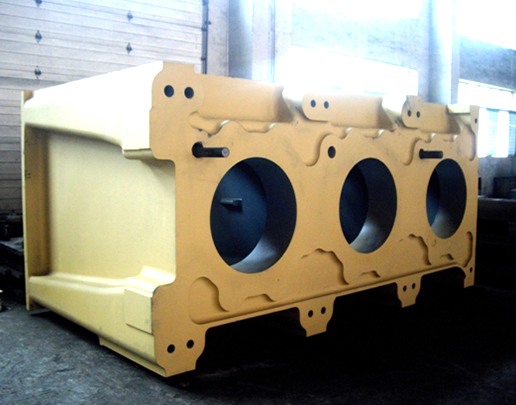
Ships operate under complex navigation conditions. Marine corrosion, vibration shock and temperature fluctuations continuously test all components. Procurement of Dalian marine parts shall be arranged comprehensively in compliance with ship survey rules, vessel service conditions and delivery terms. A full control procedure shall be established covering demand submission, supplier screening, document verification, incoming inspection and account management, so as to reduce failures during on-board installation and navigation.
At the procurement initiation stage, clarify full vessel information for each part, including ship type, classification society requirements, equipment model and installation position. Distinguish between exposed deck parts, in-tank parts, high-temperature engine room parts and pressure-bearing piping parts, as different locations require different resistance levels; orders shall not be placed merely based on shape matching. Most Dalian marine parts must comply with ship survey regulations. Buyers shall confirm in advance whether supporting certificates are required. Without relevant certificates, even physically identical critical components cannot pass survey inspection and will delay ship repair and construction. List material standards, dimensional tolerances and anti-corrosion requirements clearly on the requisition. If original samples are available, keep samples or complete drawings to avoid supplier misinterpretation and non-conforming products.
During supplier screening, prioritize suppliers familiar with marine outfitting requirements, and verify their past supply records and product inspection capacity. Inform suppliers clearly of applicable rules, certificate types and marking requirements in advance. Some Dalian marine parts require steel stamps on the body indicating material, batch number and survey certificate number; such requirements shall be specified in the procurement contract. Besides price and delivery lead time, the contract shall cover warranty scope, return & replacement terms for defective goods and liability for delayed delivery. Ship repair projects have tight schedules; delayed parts supply will easily cause idle berths. For imported marine parts, reserve sufficient time for customs declaration, clearance and logistics, and confirm documentary requirements beforehand.
Document and certificate verification is a core control step. Upon delivery, check not only appearance and quantity but also accompanying documents. Document requirements vary by part category: metal forgings, valves and fasteners require material test certificates; pressure-containing parts need pressure test records; electrical components must come with explosion-proof and insulation test reports. For Dalian marine parts used on classed vessels, survey certificate data shall match nameplates and batch numbers strictly. Copies and electronic versions of certificates shall be properly filed for surveyors’ review. Goods with incorrect certificate information or mismatched serial numbers shall be isolated and withheld from on-board assembly.
On-site inspection shall be carried out against drawings and samples. Visually check for sand holes, cracks and dents, uniform anti-corrosion coating, and rust-free exposed threads. Randomly recheck dimensions with measuring tools, focusing on threads and flange mating surfaces to prevent assembly misalignment. For seawater-prone components, verify anti-corrosion treatments such as hot-dip galvanizing, coating and passivation to ensure compliance with agreed standards. Implement proportional sampling for bulk shipments. Expand sampling scope if non-conformities are found; reject the whole batch if defects are widespread. Keep complete inspection records including arrival date, quantity, test results and inspector information.
Warehousing and outbound management shall fit the storage characteristics of marine parts. Most Dalian marine parts are made of carbon steel prone to rust when damp. Maintain dry and ventilated storage conditions, and apply anti-rust packaging for metal parts. Keep seals and rubber gaskets away from direct sunlight and high temperatures to prevent aging. Store different models and certified batches separately with clear labels to avoid mixing. Follow the FIFO principle for outbound delivery, and attach certificate copies to goods supplied to shipyards and on-site construction teams.
After delivery, build supplier and component archives to record supply quality, delivery punctuality and after-sales service. Continuously monitor product stability for long-term suppliers. If parts malfunction during on-board commissioning, communicate promptly with suppliers to identify root causes (product defects, improper selection or installation), and update technical specifications in procurement lists accordingly. With the full set of procurement control procedures implemented, Dalian marine parts can better meet the repair, construction and maintenance demands of coastal and ocean-going vessels, lowering navigation risks caused by component failure.