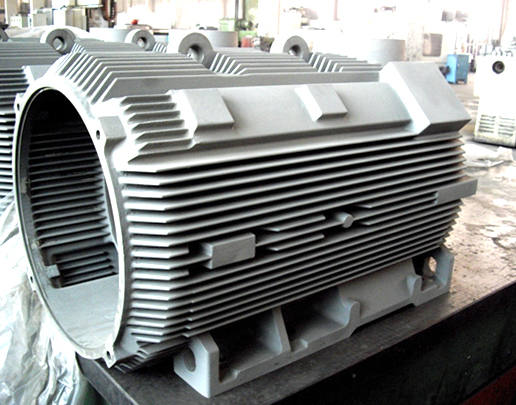
How to Extend the Service Life of Dalian Motor Housing
As the "heart" of industrial and civil‑use equipment, motors rely on coordinated operation of all components for stable performance. As a core structure holding stators, rotors and heat‑dissipation systems, motor housings deliver protection, support and heat dissipation, directly determining overall motor service life. In many cases, motors are scrapped prematurely due to housing corrosion, deformation, cracking and other failures, raising operation and maintenance costs. Fine‑grained full‑process control is required to prolong motor housing service life.
First, optimized material selection and anti‑corrosion treatment lay the foundation for long service life. Common housing materials include grey cast iron, aluminum alloy and cold‑rolled steel. Material selection shall match service conditions: for coastal salt‑spray and high‑humidity environments, hot‑dip galvanized or electrophoretic aluminum alloy housings are preferred. Their compact zinc or coating layers block chloride ions and moisture, achieving 2‑3 times longer service life than ordinary spray‑painted housings. For normal‑temperature dry environments, high‑strength grey cast iron housings with electrostatic powder spraying are cost‑effective with sound structural rigidity against oxidation and rust. A port handling motor originally fitted with ordinary cold‑rolled steel housing developed rust holes within six months from salt‑spray erosion. After switching to hot‑dip galvanized aluminum alloy housing, no housing corrosion occurred across its 3‑year operation‑maintenance cycle, which validates the significance of material adaption.
Second, enhance structural design and manufacturing precision to eliminate inherent defects. Rational structure underpins housing durability. The spacing of cooling fins shall be optimized according to motor power. Over‑dense fins trap dust and block heat dissipation channels; over‑sparse ones result in insufficient heat dissipation. Sustained high temperature triggers metal fatigue. Housing wall thickness shall fit load conditions: overly thin walls deform under external force while excessive thickness brings unnecessary costs. Strict quality control shall be implemented in manufacturing: avoid casting defects such as sand holes and blowholes for grey cast iron housings; conduct air‑tightness tests on welding joints of aluminum alloy housings; control welding stress for cold‑rolled steel housings to prevent cracking during long‑term operation. A motor manufacturer optimized cooling‑fin layout via finite‑element analysis, boosting housing heat‑dissipation efficiency by 15% and cutting metal‑fatigue loss by 20%, which substantially extended housing service life.
Third, standardize installation and daily operation‑maintenance to mitigate acquired damage. Tighten foundation bolts evenly during installation to avoid deformation caused by uneven local stress. Keep coupling misalignment within 0.1 mm to reduce vibration impact on housings. In daily maintenance, regularly remove dust and oil contaminants from cooling fins. Built‑up industrial dust can raise housing temperature by 10‑15 °C and accelerate aging. Inspect end‑cover seals every six months to prevent moisture ingress and inner‑wall corrosion. Apply anti‑rust grease on inner housing walls in humid environments to isolate moisture from metal for improved protection.
Fourth, implement periodic inspection routines for early fault prediction. Motor housing damage develops progressively, which allows timely intervention through regular monitoring: measure housing vibration monthly with a vibrometer and troubleshoot installation or bearing faults once readings exceed thresholds; check housing surface temperature quarterly against rated motor temperature rise to identify heat‑dissipation blockages; conduct anti‑corrosion coating flaw detection annually. Touch‑up anti‑rust paint upon coating peeling or micro‑cracks to prevent defect expansion and severe damage.
Motor housing service life is jointly determined by material, structure, workmanship and maintenance rather than a single factor. Full‑process fine control enables stable housing operation under complex working conditions, cuts equipment downtime and overall maintenance costs, and guarantees long‑term reliable motor performance.