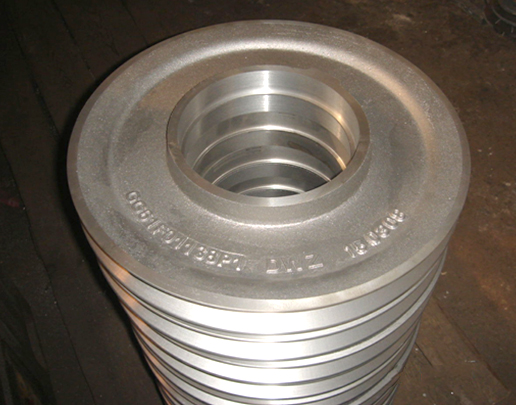
As an important component of the manufacturing industry, Dalian castings have strict requirements in terms of production processes, material selection, design principles, and quality control. With the advancement of technology and the development of manufacturing, castings are moving towards high performance, high precision, and green environmental protection, providing higher quality products and solutions for applications in various fields. In the future, casting technology will continue to innovate and advance, making greater contributions to the development of the manufacturing industry.
The production process of castings mainly includes steps such as mold design, melting, pouring, cooling, cleaning, and post-treatment. Mold design: Design and manufacture molds based on the shape and size requirements of the parts. The mold can be made of sand mold, metal mold, or other materials. Melting: Heating metal materials to a molten state and adjusting their chemical composition to meet performance requirements. Pouring: Pour molten metal into the mold to ensure that the metal liquid evenly fills the mold cavity. Cooling: After the metal liquid cools and solidifies, a solid casting is formed. The cooling process requires temperature and time control to avoid defects.
How to detect the surface quality of castings in Dalian?
1、 Visual Testing (VT)
Principle: Observe the surface of the casting directly with the naked eye or with the help of magnifying glasses, endoscopes, and other tools.
Testing content:
Macroscopic defects: sand holes, pores, cracks, flash edges, burrs, cold shuts, oxide scales, sand sticking, etc.
Dimensional deviation: Use calipers and gauges to check the residual length and wall thickness uniformity of the sprue.
Tools:
Magnifying glass (5-20 times): used to observe small cracks or pinholes (such as aluminum alloy castings).
Endoscope: detects complex internal cavity surfaces (such as the interior of an engine cylinder).
Applicable scenarios: Preliminary screening of all castings, especially suitable for first piece inspection in mass production.
2、 Surface roughness detection
Principle: Measuring surface micro geometric shape errors (roughness parameters such as Ra and Rz) through instruments.
1. Needle roughness tester
Operation: The stylus moves along the measured surface, and the sensor records contour fluctuations, directly displaying the Ra value.
Accuracy: ± 10%, suitable for surfaces with Ra=0.025-125 μ m.
Application: Metal castings, precision sand castings (such as hydraulic valve bodies, gearboxes).
2. Optical roughness meter (such as laser interferometry)
Principle: After the laser beam irradiates the surface, the roughness is analyzed through interference fringes.
Features: Non contact, suitable for soft or easily scratched surfaces (such as copper alloys, aluminum alloys).
Accuracy: up to nanometer level, used for high-precision castings (such as aerospace parts).
3. Comparative block method
Operation: Compare the surface of the casting with standard roughness samples (such as sand or metal samples), and make visual or tactile judgments.
Features: Fast and easy, but relies on the experience of the testing personnel, suitable for rough assessment on the workshop site.
3、 Non destructive testing technology
1. Penetrant Testing (PT)
Principle: Using penetrant to penetrate surface opening defects and displaying defect traces through imaging agent adsorption.
Steps:
Pre cleaning: Use solvents to remove surface oil stains and oxide scales.
Penetration: Spray red penetration solution (containing fluorescent dye or coloring agent) and leave it for 10-30 minutes.
Cleaning: Remove excess penetrant from the surface to avoid contaminating residual liquid inside the defect.
Imaging: Spray white imaging agent, and the penetrating liquid inside the defect is adsorbed to the surface, forming a red or fluorescent display.
Applicable: Surface opening defects (cracks, pores, looseness) of non porous materials (such as steel, aluminum, copper), especially suitable for small defects that are difficult to detect with the naked eye (such as 0.02mm level cracks).
Limitations: Unable to detect internal defects or closed defects.
2. Magnetic Particle Testing (MT)
Principle: Applying a magnetic field to ferromagnetic materials (such as steel and cast iron) generates magnetic leakage and adsorption of magnetic powder at the defect site, forming a display.
Category:
Dry powder method: Magnetic powder is directly sprayed onto the surface of magnetized castings, suitable for high temperature or rough surfaces.
Wet powder method: Magnetic powder is suspended in a carrier liquid (such as water or oil), which has higher detection sensitivity and is suitable for fine defects.
Application: Detecting surface and near surface defects (depth ≤ 2mm), such as fatigue cracks in gears and crankshafts.
Limitations: Only applicable to ferromagnetic materials, requiring pre-treatment to remove surface paint or thick oxide skin.
3. Eddy Current Testing (ET)
Principle: By generating eddy currents in conductive materials such as aluminum, copper, and stainless steel through an alternating magnetic field, defects can cause changes in the eddy current field, which can be detected by a probe.
characteristic:
Non contact, capable of detecting surface and near surface defects (such as subcutaneous pores in aluminum alloy castings).
It can simultaneously measure coating thickness or material conductivity (such as determining heat treatment status).
Application: Batch testing of non-ferrous metal castings (such as automotive wheel hubs and compressor parts).
The chemical composition and physical properties of casting materials should comply with relevant standards to ensure the performance and quality of castings. Casting process parameters such as pouring temperature, cooling rate, pressure, etc. should be strictly controlled to reduce the occurrence of defects. Castings should undergo non-destructive testing, such as X-ray inspection, ultrasonic testing, magnetic particle testing, etc., to detect and eliminate internal defects. The dimensional accuracy of castings should meet the design requirements, and mechanical processing should be carried out if necessary to ensure their accuracy.
Common casting materials include cast iron, cast steel, aluminum alloy, copper alloy, etc. Among them, cast iron parts have good wear resistance and shock absorption, and are widely used in mechanical bases, machine tool beds, etc; Steel castings have high strength and toughness, and are commonly used in heavy machinery and engineering equipment; Aluminum alloy and copper alloy parts are widely used in the automotive and electronics industries due to their lightweight and good thermal conductivity.