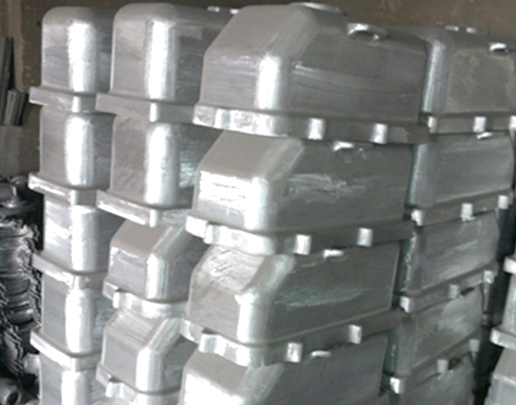
As a key coastal hub for equipment manufacturing, shipbuilding and port industries in Northeast China, Dalian relies heavily on castings as foundational components for ships, port machinery and heavy machine tools, whose quality determines downstream equipment safety and service life. Unique production scale, equipment and application conditions bring recurring casting defects requiring strict control.
Porosity
Prevalent internal defect from sand casting. Excess sand moisture, rusted raw materials and poor venting at small foundries trap gas in molten metal. Common in marine steel valves and hydraulic parts, porosity causes leakage in hydrostatic tests and endangers cabin pressure safety.
Sand inclusions and scabs
Typical defects on large heavy-duty castings like machine tool beds and crane booms. Weak sand molds or fast pouring washes sand into the melt, forming sand inclusions or surface scabs. Inclusions lead to insufficient machining allowance and scrap parts; scabs create stress concentration and weaken fatigue resistance.
Shrinkage cavities and microporosity
Frequent in uneven-thickness complex castings such as marine crankshafts and heavy steel gears. Improper riser design and unstable pouring temperatures (low workshop temperatures in Dalian winters worsen the issue) cause macro shrinkage holes and microscopic porosity detected via NDT. These flaws reduce mechanical strength and trigger sudden fracture under heavy loads.
Cracks (hot & cold)
Hot cracks arise from rapid cooling and rigid molds during high-temperature plastic deformation. Cold cracks form from residual stress without stress relief, exacerbated by cold winter temperatures that accelerate crack propagation. Cracks on port machinery supports and rudder castings pose severe operational risks.
Segregation and substandard mechanical properties
Stringent performance requirements for local equipment demand uniform melt composition. Imbalanced raw material ratios, inadequate deoxidation or uneven stirring trigger segregation, lowering local strength and corrosion resistance. Segregation on bronze marine propellers accelerates corrosion and shortens service life.
In summary, Dalian casting defects mainly stem from flawed process control, poor environmental adaptation and mismatched downstream standards. Process upgrades and improved inspection technologies are necessary to meet high-end manufacturing specifications.